
Notes from a CTO #16: Desensitized to AI Hype — Until Three Weeks Ago

For the First Time, I’m Scared and Excited at the Same Time about AI.
A lot of trends come and go — crypto, Bitcoin, Web3, and plenty of others. Even when ChatGPT first arrived, I was impressed. I understood the technology but I wasn’t that excited. That might also be one of the reasons I didn’t put in money into Nvidia.
When GPT-4.5 was released, I thought the LLM market had saturated and there was nothing truly new left in this space. Sure, we use LLMs in a lot of our processes, but none of it had really made me excited — or scared — until I started using Opus 4.5 over the last three weeks.
Maybe this would work with Codex, maybe it would work with Gemini Pro or other models. I haven’t looked into them; I haven’t given those models a second thought. Opus was the one I started using because the Anthropic team said they built Claude Code and Claude Work using just Opus 4.5. Of all the marketing hype out there, the people I trust on this are those guys.
I’ve been bombarded with AI hype gurus, and it has made me desensitized to all of these changes. Unless something comes from a great developer that I trust — not just the hype — I don’t try a lot of new things. There was a point when I was trying everything, left and right, open source and all.
But I stopped. In the last three months, I stopped trying new things unless they came from an incredible source, because everything looks shiny and everything is super noisy right now. Hacker News fills up with “some model did X, some model did Y.” I was tired of Reddit, and I was tired of Hacker News.
Once the Anthropic team put that message out, I wanted to see for myself. And for the last four weeks, I have been coding. After work, I’ve been building things here and there. Some nights I’ve been coding until 4 AM — multiple days in a row.
The Moment My Mind Was Blown
I’ve also been using a lot of AI tools. And for the first time, I am genuinely scared and excited at the same time — because LLMs are able to do certain jobs a lot better than me.
Here’s the thing: I was never a good coder. I always tell my team that. I learned R because I was a data scientist. I learned Python because it was required. I build things, but I’m not a natural programmer.
There are decisions I made early on at Docsumo that are causing trouble now because they were wrong. There are also a lot of good decisions I made that make things much easier. So I might not be the best person to get excited about new technology. But looking at the code I’ve been able to write — from building a website, to creating a fully working product, to adding complicated features — and having the code run perfectly on the first try? That blows your mind.
It’s not just the building part either. Even when you think about making presentations or creating materials for customers, I think AI has fundamentally changed things.
One important caveat — and I want to be clear about this. There is good article I read: “Code is cheap, software is difficult.” I still agree with that. Code is cheap, and software is difficult.
Key realization:
👉 Writing code is largely solved. Building great software is not.
There’s a massive difference between generating code and building real products — designing systems, making trade-offs, shipping, iterating, and most importantly… distribution. And all the developers will have to move to this part of product development.
And now more than ever:
Distribution. Distribution. Distribution.
I’m not making a grand extrapolation from a small side project. Software development is going through a massive shift, and there’s a real probability that I’m not making a perfect assumption here because things are going to get tricky. This weekend, I’m taking at least five or six ticket the team has and trying to solve them end-to-end. I’ll keep you all updated on how that goes.
The project still has to go through security reviews and everything — it’s not like the job is fully done. But one thing I’ve always been proud of, and one area where I’ve always been lucky, is looking at technology and being able to extrapolate on it capacity and limitation. I get that same gut feeling about this one.
What I Built in Three Weeks
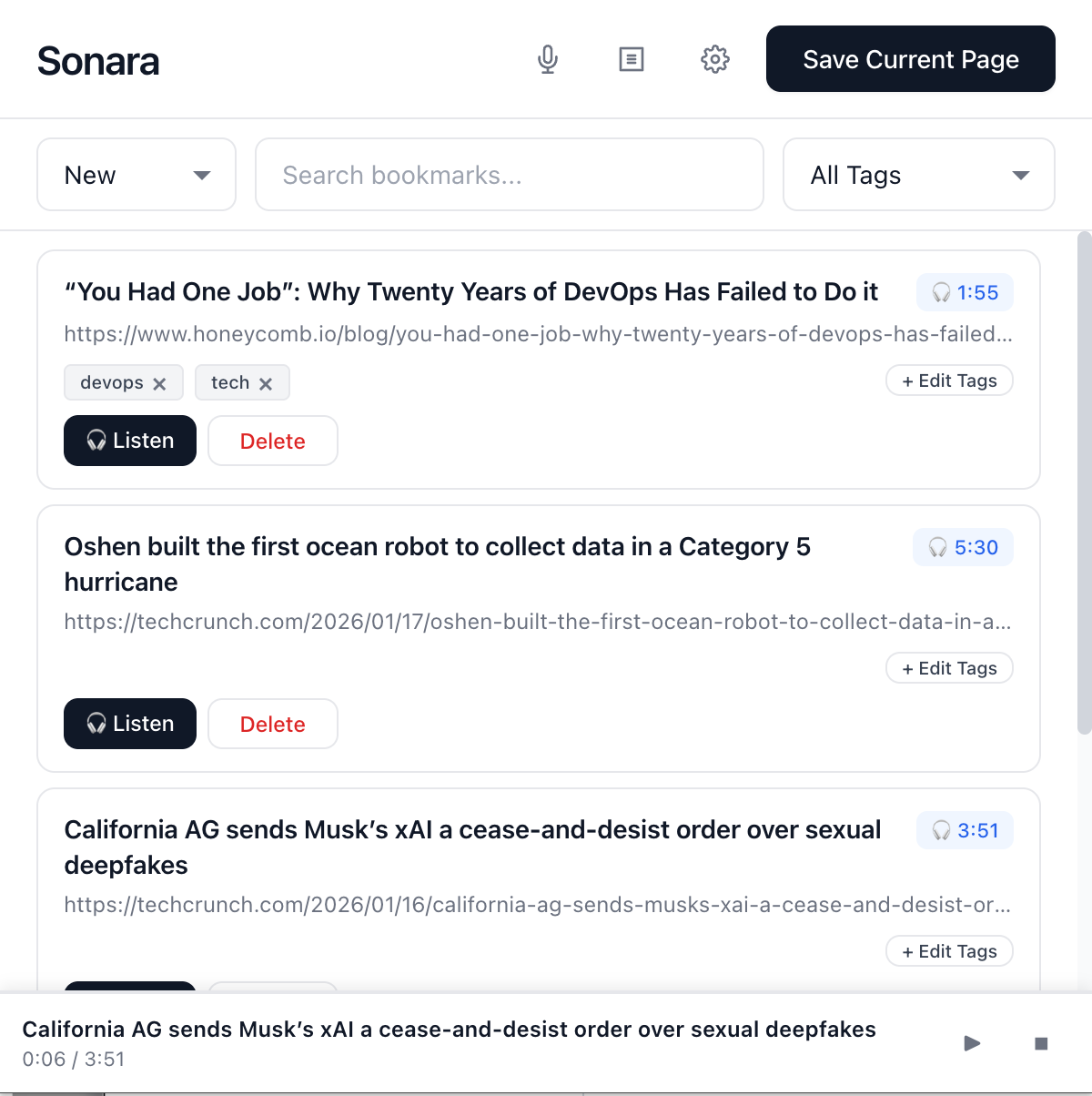
Sonara: Article-to-Audio Google Add-on
I built a chrome add-on that converts articles into audio so I can listen to them in the voice of anyone I want. Initially I used Deepgram, then transferred it to Kokoro TTS. I even added a voice cloning feature — the voice I use belongs to one of my favourite Hollywood actors. I love his calming voice. It’s purely for personal use, so hopefully I’m not infringing on anyone’s copyright.
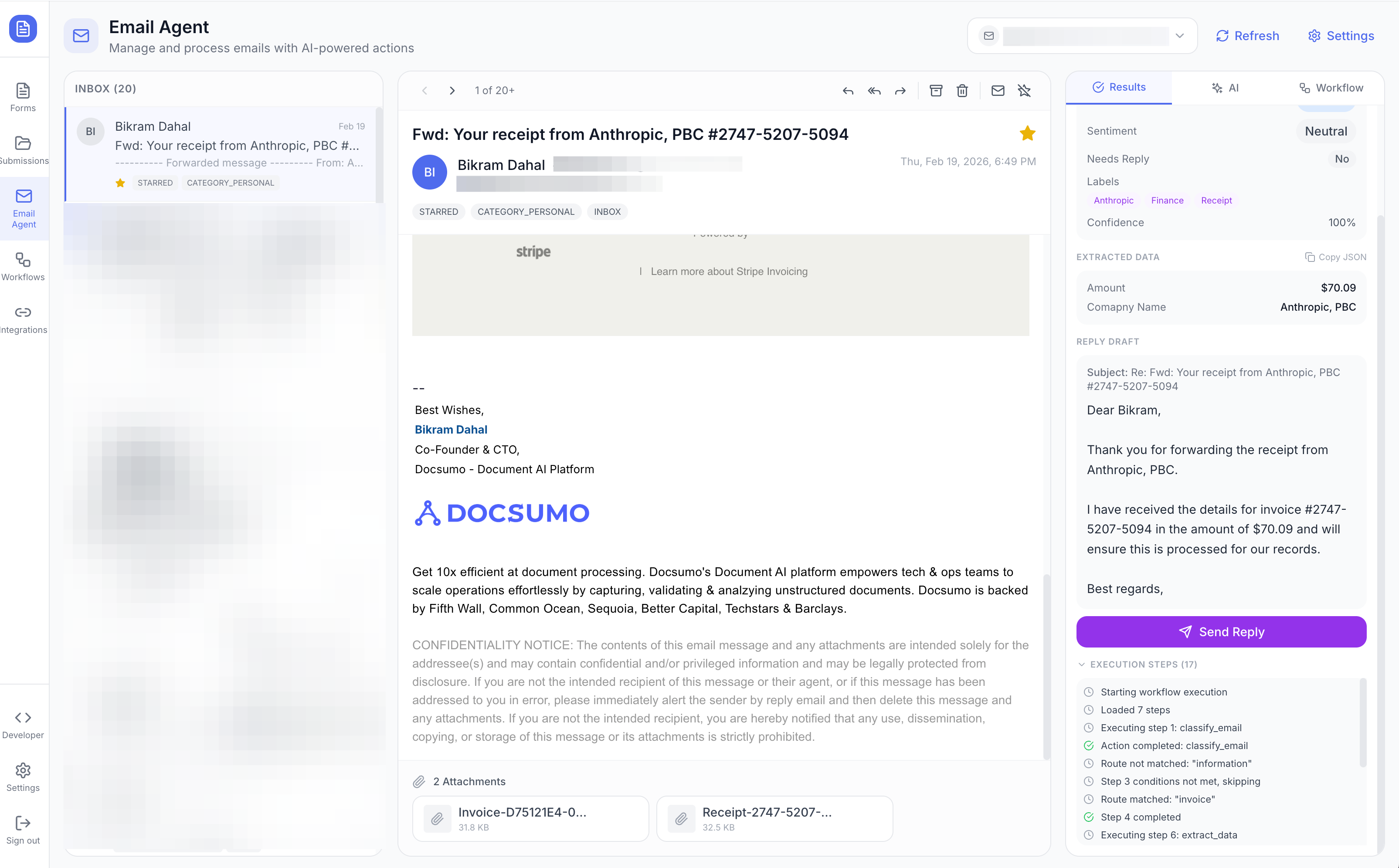
DocGather: Intelligent Document Collection & Verification.
The second thing I built was a website for collecting documents and email agents. These projects are smartly aligned with something we’ve wanted to build at Docsumo — something that’s been on our roadmap for the last three years but we never found the time to tackle. The most interesting part of this is I got the domain, I made the marketing website, I have a fully functional app. Your login might have an issue. You can use your email and password because I need to get an approval for all the apps that is integrated over there.
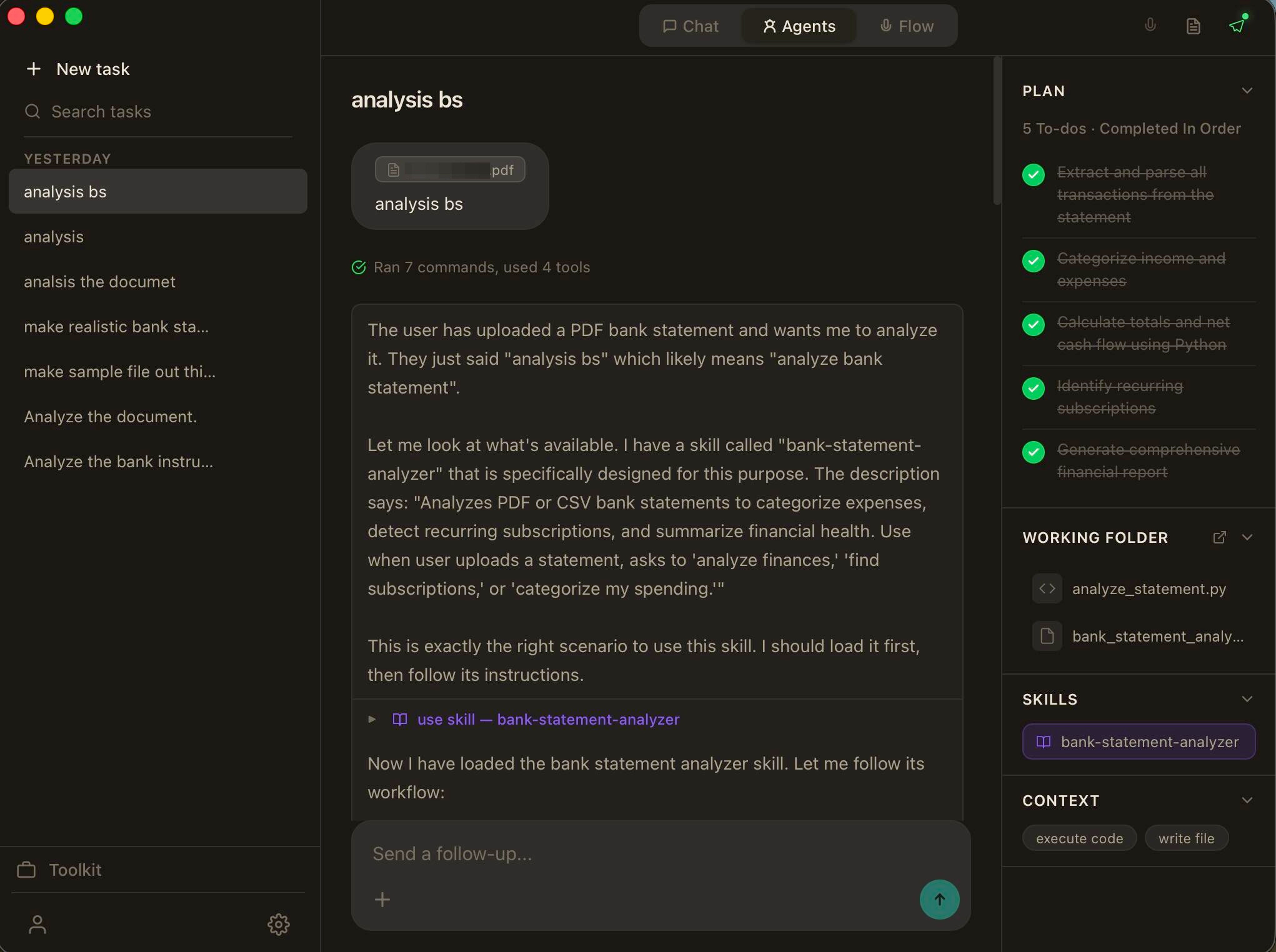
Tacon: Claude CoWork + Wispr flow
A productivity tool inspired by wispr flow and Claude CoWork — built mainly as a learning exercise. I combined the best ideas from both into a simple product that I now use daily. Surprisingly, I don’t miss any features from either. -> Will add in GitHub next week. You can check screenshot.
Can we Build a New UiPath?
One question that always used to bother me: Can we take on UiPath? Can we build a new UiPath? Because UiPath is a monster on its own. Can we build a new Salesforce?
My answer was no until few months.
Now my answer is different. Can I build it alone? Absolutely not. But if I have a smart group of 20 or 30 people who understand the space well — who know the nitty-gritty of automation — can we build a product? Yes. You still need a lot of other things but smart group of people will figure out. I’m not saying everything is solved.
But can we be the next UiPath?
No, not until “Distribution. Distribution. Distribution” is figure out. Something I am not touching on in this blog.
The barrier to entry for building products like that? I see it decreasing drastically. The code I’ve written includes files with more than 2,000 lines (refactoring is a problem for another day, It does the fabulous job on that too.). When I ask it to add a complicated feature that spans 20+ files, and the code runs perfectly on the first try — that changes your perspective on where the world is heading.
AI Won’t Make Everyone Smarter
Here’s a realization that’s been bothering me, and I’ve been sharing it with my team.
I thought AI was going to make everyone smarter. I thought we’d have 10x engineers left and right. But here’s what I’ve actually observed: the people who are already really good at their craft are going to get 10x better. People who are average and don’t have the appetite to learn or to question themselves? They won’t get meaningfully better with AI.
It’s not that everyone is suddenly going to be a great engineer just because AI exists. You need a certain level of curiosity and critical thinking to use AI well. The people who’ve already been learning on their own time — picking up new programming languages, experimenting with new tools — will use AI far better than those who haven’t. That gap is going to become insane.
A Note on How This Blog Was Written
I haven’t written a blog in a long time. This article was edited by AI — but the thought is completely mine.
What I did was use my own product - talcon to dictate my thoughts into substack, and then I asked Claude cowork to fix the grammar. The article was ready in about 15 minutes + 30 mins of editing — something that used to take me an insanely long time.
The message is the same. I’m not letting AI add new lines of thought or modify the original thinking in my mind. I had never imagined I’d be able to write a blog in less than 15 minutes with my thoughts properly organized and in place.
Quotes/ Books
First, solve the problem. Then, write the code.
John Johnson
I used quote from last article because I think this is more relevant now than ever.
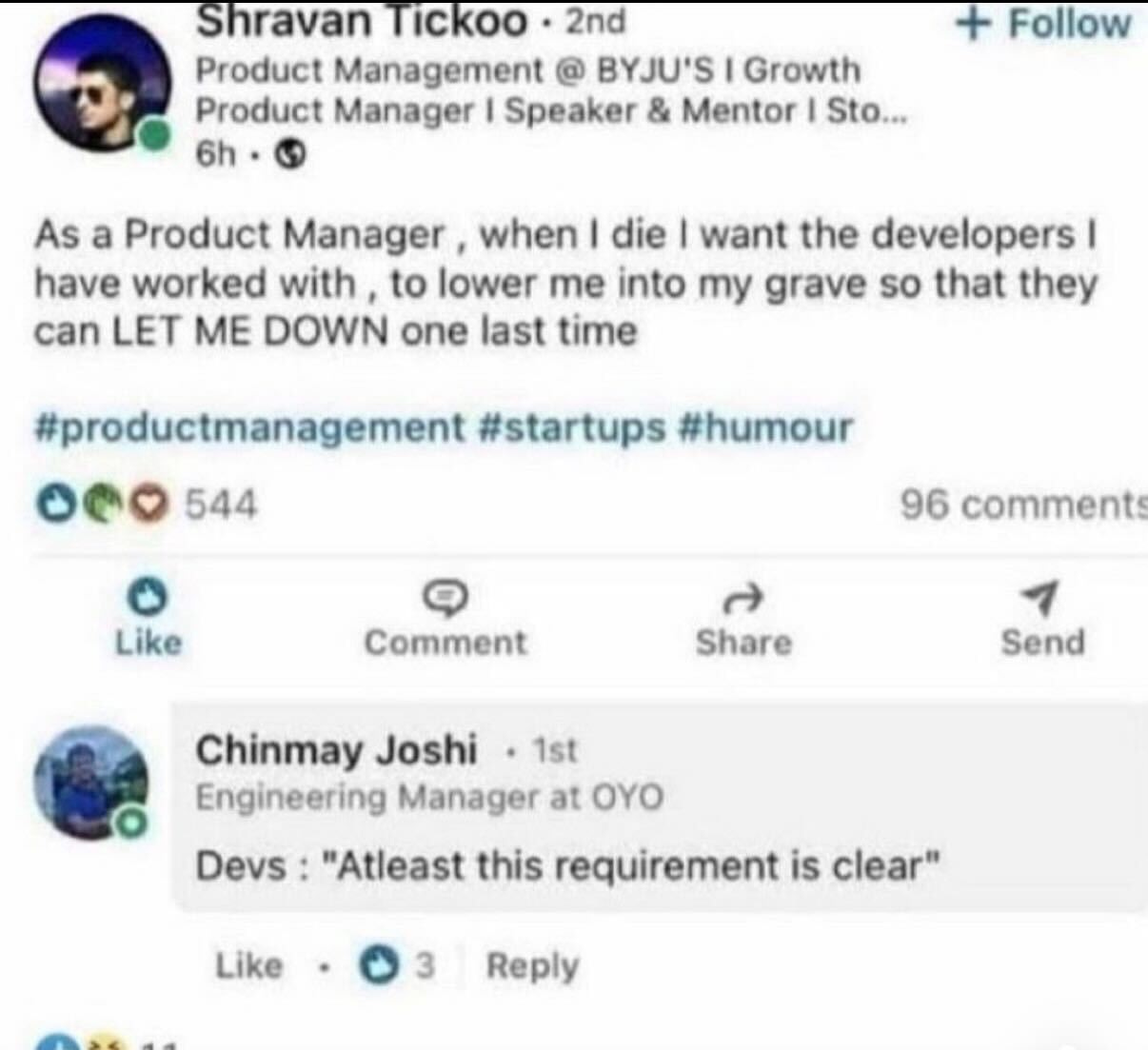
Meme from our Slack - old is gold
That’s it for this edition. I hope you find it useful.
Best,
Bikram Dahal